Lab Furnace Equipment Guide: Overview, Types, Working Principles, and Applications
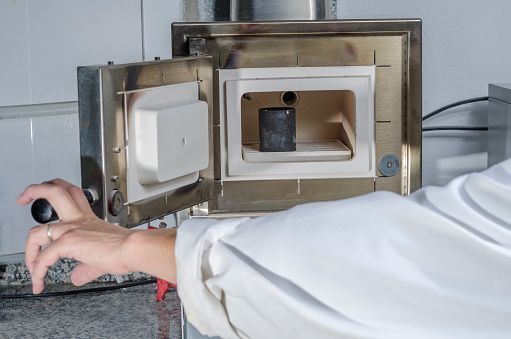
Lab furnace equipment refers to controlled heating systems designed for laboratory environments. These furnaces are used to heat materials at precise temperatures for testing, processing, and analysis. Unlike general heating devices, laboratory furnaces are built to maintain stable thermal conditions, uniform heat distribution, and repeatable results.
Laboratory furnaces exist to support scientific accuracy. Many materials change their physical or chemical properties when exposed to heat. A lab furnace allows researchers, technicians, and analysts to observe, measure, and control these changes under defined conditions.
Why Lab Furnaces Matter Today
Laboratory furnaces play a critical role in modern research, education, and industrial testing. As materials become more advanced, temperature accuracy and consistency are increasingly important.
They affect a wide range of users, including:
-
Research laboratories
-
Educational institutions
-
Quality control facilities
-
Materials testing centers
-
Environmental and chemical analysis labs
Key problems lab furnaces help address include:
-
Inconsistent material behavior during testing
-
Inaccurate thermal processing results
-
Contamination during heating cycles
-
Poor repeatability in experimental conditions
High-precision laboratory furnace systems support reproducible data, which is essential for scientific validation and regulatory compliance.
Recent Developments and Industry Trends
Over the past year, laboratory furnace technology has continued to evolve, focusing on efficiency, accuracy, and safety.
Notable trends observed during 2025 include:
-
Increased adoption of digital temperature controllers with programmable profiles
-
Wider use of energy-efficient insulation materials to reduce heat loss
-
Improved safety interlocks and automatic shutdown features
-
Enhanced data logging for research documentation and audits
Many modern high temperature laboratory furnaces now integrate smart monitoring systems that record heating cycles, dwell time, and cooling rates. This supports better traceability in experimental workflows.
Regulatory Standards and Policy Considerations
Laboratory furnace equipment is influenced by international technical standards and safety frameworks rather than region-specific programs.
Common regulatory and compliance considerations include:
-
Electrical safety standards for laboratory equipment
-
Thermal insulation and surface temperature limits
-
Emission and ventilation requirements for high-temperature processes
-
Laboratory workplace safety guidelines
Organizations often align furnace usage with globally recognized standards such as:
-
ISO laboratory safety guidelines
-
IEC electrical equipment standards
-
Occupational laboratory safety frameworks
These policies aim to reduce risk, ensure consistent operation, and protect laboratory personnel.
Types of Lab Furnace Equipment
Different laboratory applications require different furnace designs. Each type is optimized for specific temperature ranges and material behaviors.
Common laboratory furnace types include:
-
Muffle furnace
-
Tube furnace
-
Vacuum furnace
-
Ashing furnace
-
High temperature furnace
Comparison Table: Common Lab Furnace Types
| Furnace Type | Typical Temperature Range | Key Use Case |
|---|---|---|
| Muffle furnace | Up to 1,200°C | Heat treatment, material testing |
| Tube furnace | Up to 1,600°C | Controlled atmosphere experiments |
| Vacuum furnace | Variable | Oxidation-free heating |
| Ashing furnace | Up to 1,100°C | Residue and purity analysis |
| High temperature furnace | Above 1,700°C | Advanced materials research |
Working Principles of Laboratory Furnaces
Laboratory furnaces operate by converting electrical energy into controlled thermal energy. Heating elements raise the internal chamber temperature while insulation minimizes heat loss.
Core working components include:
-
Heating elements (resistance or ceramic-based)
-
Temperature sensors such as thermocouples
-
Digital or programmable controllers
-
Insulated furnace chamber
The temperature controller regulates power input based on sensor feedback, ensuring precise temperature stability. Controlled heating and cooling rates prevent thermal shock and maintain sample integrity.
Simplified Heating Process Flow
| Stage | Description |
|---|---|
| Power input | Electrical energy supplied |
| Heat generation | Heating elements warm chamber |
| Temperature control | Sensors regulate setpoint |
| Sample exposure | Material undergoes thermal process |
| Cooling phase | Controlled temperature reduction |
Applications Across Industries
Laboratory furnace equipment supports a wide range of scientific and technical activities.
Key application areas include:
-
Materials science and metallurgy
-
Ceramic and glass testing
-
Chemical compound analysis
-
Environmental residue examination
-
Academic laboratory experiments
For example, a muffle furnace is commonly used for loss-on-ignition testing, while a tube furnace supports experiments requiring controlled gas environments.
Helpful Tools and Educational Resources
Several tools and resources support the effective use and understanding of laboratory furnaces.
Useful resources include:
-
Temperature conversion calculators for laboratory use
-
Thermal profile planning templates
-
Laboratory safety manuals
-
Equipment operation guides from standards organizations
-
Data logging software compatible with furnace controllers
These resources assist with planning experiments, maintaining compliance, and improving result accuracy.
Frequently Asked Questions
What is the main purpose of a laboratory furnace?
A laboratory furnace provides controlled high-temperature conditions for material testing, analysis, and research.
How does a muffle furnace differ from a tube furnace?
A muffle furnace isolates samples from combustion gases, while a tube furnace allows controlled atmospheres within a tubular chamber.
What temperature range defines a high temperature laboratory furnace?
High temperature laboratory furnaces typically operate above 1,700°C for advanced material processing.
Why is temperature uniformity important in lab furnaces?
Uniform temperature ensures consistent sample exposure and reliable experimental results.
Are laboratory furnaces used in educational settings?
Yes, they are widely used in academic laboratories for teaching thermal processes and material behavior.
Conclusion
Lab furnace equipment is a foundational tool in scientific and technical laboratories. By providing precise, controlled heating environments, these systems enable accurate experimentation, reliable testing, and consistent data generation. Advances in digital control, safety features, and thermal efficiency continue to improve laboratory furnace performance, supporting modern research needs while aligning with global safety and compliance standards.