Laser Welding Machines Explained: Basics, Useful Resources, Helpful Tips, and Technical Facts
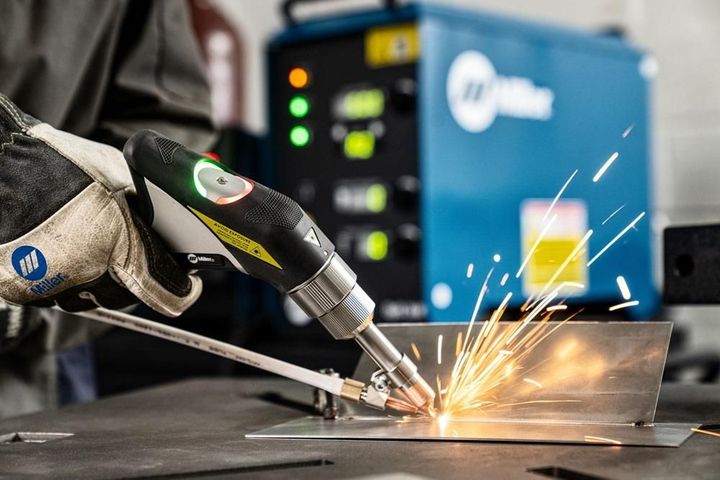
Laser welding machines are advanced industrial tools that use a highly focused laser beam to join metals and certain thermoplastics. The technology exists to create strong, precise welds with minimal heat impact on surrounding materials. Unlike traditional welding methods, laser welding concentrates energy into a very small area, allowing accurate control over depth, width, and strength of the joint.
This approach was first developed for aerospace and electronics applications where accuracy and material integrity are critical. Today, laser welding is widely used in automotive manufacturing, medical device production, electronics assembly, and precision engineering environments.
The core principle is simple: a laser generates intense heat that melts material at the joint line, forming a weld as it cools. However, the systems behind this process involve complex optics, motion control, cooling units, and safety mechanisms.
Why Laser Welding Technology Matters Today
Laser welding machines play a significant role in modern manufacturing because industries increasingly require precision, consistency, and automation. As product designs become smaller and more complex, traditional welding methods may introduce excess heat, distortion, or material stress.
This technology matters for several reasons:
-
It supports high-precision manufacturing standards
-
It reduces material deformation during joining
-
It enables automation and robotic integration
-
It supports repeatable and controlled production processes
Industries affected by laser welding include:
-
Automotive and electric vehicle manufacturing
-
Medical equipment and implant production
-
Consumer electronics and semiconductor assembly
-
Aerospace and defense engineering
Laser welding also helps address challenges such as joining dissimilar metals, achieving clean seams, and maintaining structural integrity in thin materials.
Recent Developments and Industry Trends (2024–2025)
Over the past year, laser welding technology has continued to evolve, driven by automation and digital manufacturing trends.
Key updates include:
-
2024: Increased adoption of fiber laser welding systems due to higher energy efficiency and longer operational life
-
Late 2024: Integration of real-time monitoring systems using sensors and AI-based quality inspection
-
2025: Expansion of laser welding in battery manufacturing for electric vehicles, especially for copper and aluminum joints
Manufacturers are also focusing on closed-loop control systems that automatically adjust laser parameters during operation. This improves weld consistency and reduces error rates in automated production lines.
Another notable trend is the growing emphasis on operator safety and compliance documentation as laser systems become more powerful and accessible.
Laws, Regulations, and Safety Standards Affecting Laser Welding
Laser welding machines are governed by safety and compliance standards to protect operators and workplaces. Regulations vary by country but follow similar international principles.
In India and many other regions, laser welding systems are influenced by:
-
Occupational safety standards related to laser radiation exposure
-
Factory safety regulations under industrial safety laws
-
International laser classification standards such as IEC 60825
-
Workplace safety guidelines issued by industrial safety authorities
Key compliance requirements typically include:
-
Proper laser enclosure or shielding
-
Use of certified laser safety eyewear
-
Warning labels and controlled access areas
-
Operator training and safety documentation
These policies exist to minimize risks such as eye injury, skin exposure, and accidental reflection of laser beams.
Tools, Software, and Educational Resources for Laser Welding
Several tools and resources help users understand, plan, and manage laser welding processes without promoting commercial activity.
Helpful categories include:
-
Laser parameter calculators for power density and focal length
-
Simulation software for weld path planning
-
Industrial safety guidelines from standards organizations
-
Technical documentation libraries from research institutions
Examples of commonly referenced resources:
-
Engineering handbooks on laser-material interaction
-
Manufacturing automation learning platforms
-
Government safety portals covering laser equipment use
-
Technical journals focused on welding and materials science
These resources help users improve knowledge, ensure compliance, and understand process limitations.
Technical Comparison Table: Laser Welding vs Traditional Welding
| Feature | Laser Welding Machines | Conventional Welding |
|---|---|---|
| Heat Affected Zone | Very small | Larger |
| Precision Level | High | Moderate |
| Automation Compatibility | Strong | Limited |
| Material Thickness Range | Thin to medium | Medium to thick |
| Distortion Risk | Low | Higher |
This table highlights why laser welding is preferred for precision-driven applications.
Common Laser Types Used in Welding Applications
| Laser Type | Typical Use Case | Key Characteristic |
|---|---|---|
| Fiber Laser | Automotive, electronics | High efficiency |
| CO₂ Laser | Sheet metal processing | Long wavelength |
| Nd:YAG Laser | Medical devices | Pulsed operation |
Each laser type is selected based on material properties and process requirements.
Frequently Asked Questions About Laser Welding Machines
What materials can be welded using laser welding machines?
Laser welding is commonly used for steel, stainless steel, aluminum, titanium, copper alloys, and certain engineered plastics.
Is laser welding suitable for automated manufacturing lines?
Yes. Laser welding systems are often integrated with robotic arms and CNC platforms for automated and repeatable processes.
How does laser welding differ from arc welding?
Laser welding uses focused light energy rather than an electric arc, resulting in higher precision and reduced heat spread.
Are laser welding machines safe to operate?
When used according to safety standards, including protective enclosures and eyewear, they are considered safe in industrial environments.
Can laser welding be used for delicate components?
Yes. The controlled heat input makes it suitable for small, sensitive, or thin components.
Visual Data: Laser Welding Adoption by Industry (Illustrative)
Industry Adoption Trend (Relative Scale)
Automotive
Electronics
Medical Devices
Aerospace
This illustrates how widely laser welding technology is applied across sectors.
Final Thoughts on Laser Welding Machines
Laser welding machines represent a significant advancement in joining technology, offering precision, consistency, and adaptability for modern manufacturing needs. Their importance continues to grow as industries demand tighter tolerances, automation compatibility, and improved quality control.
Understanding how these machines work, the regulations governing them, and the resources available for learning helps readers make informed decisions and build technical awareness. As manufacturing evolves, laser welding remains a foundational technology supporting innovation, safety, and efficiency across multiple sectors.